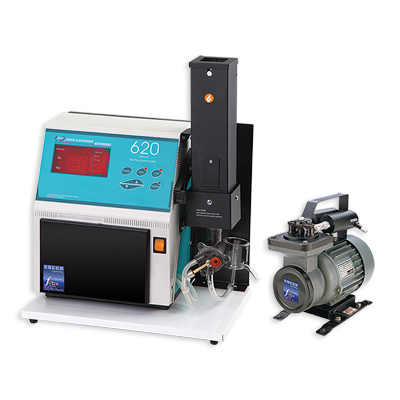
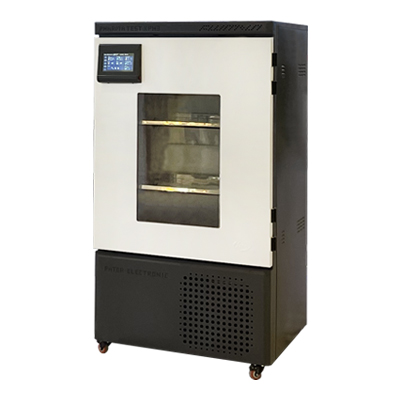
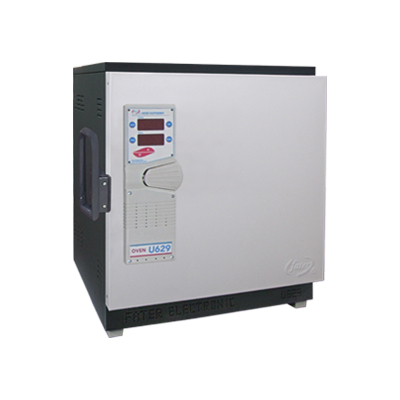
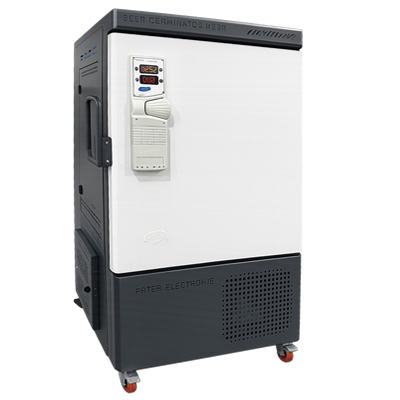
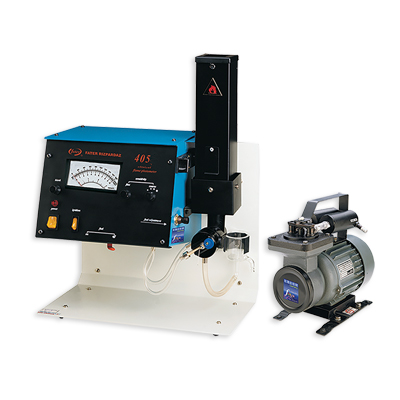
The flame photometer is a device for measuring the mass of elements, used for the analysis of inorganic chemicals.
In fact what the flame photometer does is atomic spectroscopy (sodium, potassium and others), which we will explain more widely later in this article.
1How the flame photometer works
Before you know how the flame photometer works, it is better to be familiar with the parts of this device. The device has the following parts:
- Heat source
This device includes a heat source to create the flame. The temperature of the flame in the flame photometer is always constant.
- Nebulizer and mixing chamber
This part of the device makes it easy to carry the substance to the heat source section at a constant rate.
- Optical system
The optical system includes three parts: a convex mirror, a lens and a filter. In the process of this device, the convex mirror passes the light emitted from the atoms to the lens and leads to the focusing of the light emission.
The lens then focuses the light at a point called the slit; the reflections of the light emitted from the mirror pass through the slit and reach the filters. The filters make measurement possible by separating the wavelengths.
- Photodetector
The last part of this device is the photodetector, which detects the light emitted and prepares it for measurement.
So in brief it can be said that the working principle of the flame photometer is to separate the elements of the two groups of alkali metals (group I) and alkaline earth metals (group II), and this is done by contact with thermal energy. Immediately after thermal excitation, the atoms of any substance are released and jump to a higher energy level.
The excited levels are unstable, so the excited atoms lose their energy and, by emitting radiation that is completely visible, turn into a light wave.
The wavelength of the light, which is different in different elements and is obtained from the excitation of electrons, is measured by the device using direct absorption methods.
2Wide applications of the flame photometer
As you know, the flame photometer is used in various industries such as chemicals, medicines, glass and ceramics, water, oceanography and biological laboratories. Some of the most common applications of this device are described below:
- The flame photometer is used to determine the amount of potassium, sodium and magnesium in biological fluids (such as serum and blood).
- The second application of this device is to analyze the elements in industrial and natural water (such as magnesium, barium, calcium and so on).
- The third application of the flame photometer is the analysis of the elements in soil (such as sodium, potassium, magnesium and others).
- Another application of this device is determining the amount of elements present (such as sodium and calcium) in body fluids, muscles and the heart, to diagnose some diseases.
- This device is used to determine the amount of metals present in petroleum products (such as lead and manganese).
- In the food industry this device is used to analyze the salts present (such as the amount of sodium and potassium) in soft drinks, alcoholic drinks and fruit juices.
Advantages of using the flame photometer
The advantages of using the flame photometer include the following:
- The method of analysis is very simple and economical.
- Its nature is both qualitative and quantitative.
- Even very low concentrations of metals in different samples can be determined with this device.
3Disadvantages of using the flame photometer
Despite the many advantages of using the flame photometer, this device has disadvantages:
- The exact concentration of the metal ion in the solution cannot be measured.
- This device cannot directly detect and determine the presence of inert gases.
- Although this device measures the total metal content in the sample, it gives no information about the molecular structure of the metal.
- Only liquid samples can be used.
 Read alsoMeasuring sodium and potassium with a flame photometer
4Closing words
As said in this article, the flame photometer is a device with which the elements present in different materials can be measured.
The process of this device is as follows: materials are exposed to a heat source and broken down into atoms. These atoms, because of the radiation applied, turn into a light wave, and this wavelength of light, which is different in different elements, is measured by the device using direct absorption methods.
The flame photometer has wide uses in various fields such as chemicals, medicines, glass and ceramics, water, oceanography and biological laboratories, some of which were mentioned in the applications section.
The advantages and disadvantages of using this device were also mentioned. The shortcomings mentioned depend on the brand and model of the flame photometer, and in some cases these disadvantages are reduced to a minimum because of the progress in technology in the device.